Intelligent Power Conversion.
From grid input to precision output, a single vertically integrated architecture.
The MEIRIS Platform is a vertically integrated power conversion platform built using Silicon Carbide (SiC) devices & proprietary firmware, engineered to convert, manage, and orchestrate energy with precision.
Energy is everywhere. Intelligence is not.
The Energy Transition is not a hardware problem. It is a conversion problem.
Every Megawatt of renewable generation, every EV, every battery system requires conversion. Every aspect of electricity generation and consumption involves an element of conversion. Raw electrical energy from the grid must be transformed, regulated, and delivered with precision to every load, every time. With variable sources and changing load profiles the conversion problem has become more complex. The efficiency of that conversion determines the efficiency of the entire energy system. Conversion efficiency can no longer be ignored.
MEIRIS was built to solve it differently.
“The gap between raw electrical energy and intelligent, precise power delivery is where the next generation of energy infrastructure is built.”
MEIRIS Engineering

Power Conversion, rethought at the Silicon Level
The platform's core is built around Silicon Carbide — a wide-bandgap semiconductor that operates at higher voltages, higher switching frequencies, and higher junction temperatures than conventional Silicon devices. This material choice is not incidental. It is the foundation of every performance advantage that follows.
Each module integrates an active rectifier built on SiC MOSFETs in a three-phase active bridge configuration with Active Power Factor Correction that maintains a power factor approaching unity. Designed to minimize reactive power and improve grid-side power quality. The result: grid-clean conversion, minimal harmonic distortion and maximum energy utilization.
Modules combine in parallel. Each 30kW building block scales total system output from 30kW to 360kW within a single system architecture. Scaling up of power ratings no longer means replacement or major modifications.
Power has a direction. We removed the constraint.
Bidirectionality is not a feature. It is the architecture.
Bidirectionality is native to SiC devices. The same firmware that manages charging can manage discharge. There is no mode switch.
The result: MEIRIS-powered systems can be simultaneously a power delivery system and an energy recovery system. An EV battery becomes a dispatchable grid resource. A storage bank becomes a frequency regulation asset. A distributed energy node becomes a grid-interactive participant. The physics of conversion are identical in both directions. The intelligence defines direction, magnitude, and timing. MEIRIS-powered systems can be simultaneously used as a power delivery system and an energy recovery system.
“The architecture that charges a battery is the same architecture that dispatches its energy to the grid. That is not a capability addition. That is a different way of thinking about power conversion.”
The firmware makes the platform what it is.
The firmware makes the platform what it is.
Proprietary algorithms. Real-time energy orchestration. Software-defined application.
The controller units built on a proprietary architecture and firmware form the intelligence layer that makes the platform coherent across all operating conditions, load profiles, and application contexts
Proprietary firmware orchestrates real-time power control, dynamic load management, predictive energy optimization, and grid integration without middleware latency.
“Hardware defines the boundary of what is possible. Firmware defines what actually happens. MEIRIS owns both.”
One Platform. Multiple Applications
The power module platform architecture, control topology, and firmware intelligence are consistent across applications. Application-specific behaviour is determined at the software layer — not through hardware redesign.
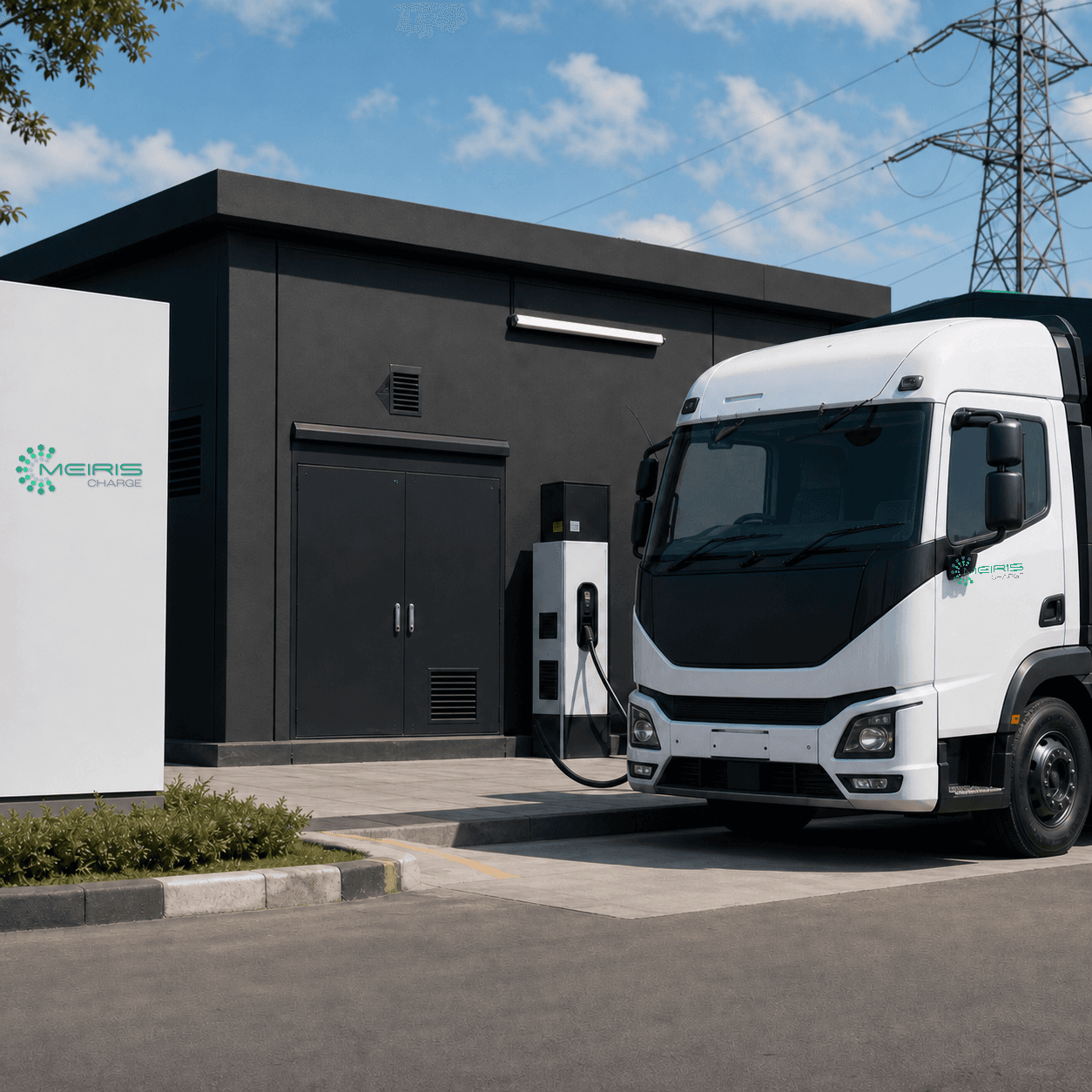
EV Charging Solutions
DC Fast Chargers • AC Chargers • Onboard Chargers
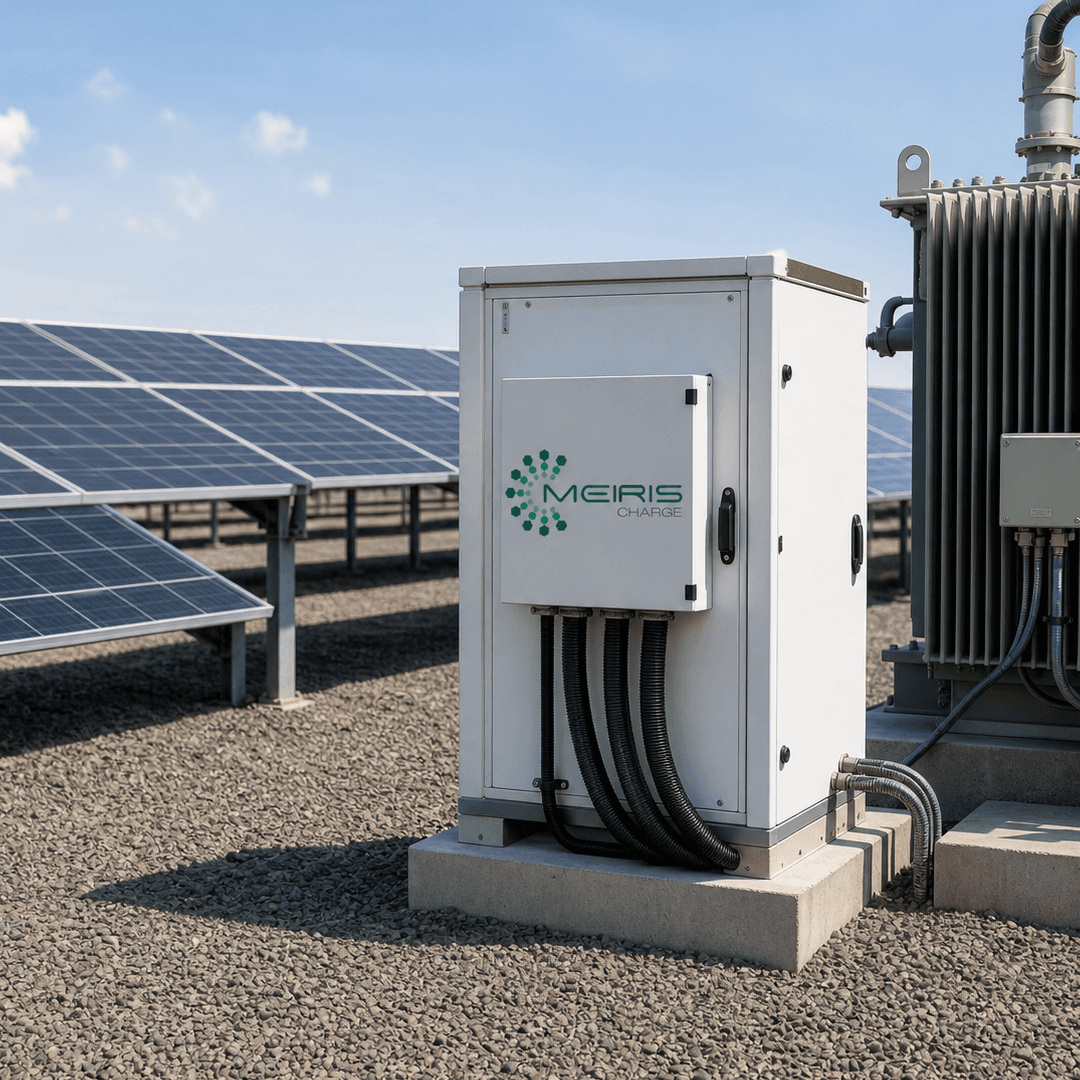
Solar
High output (>100 kVA) inverters
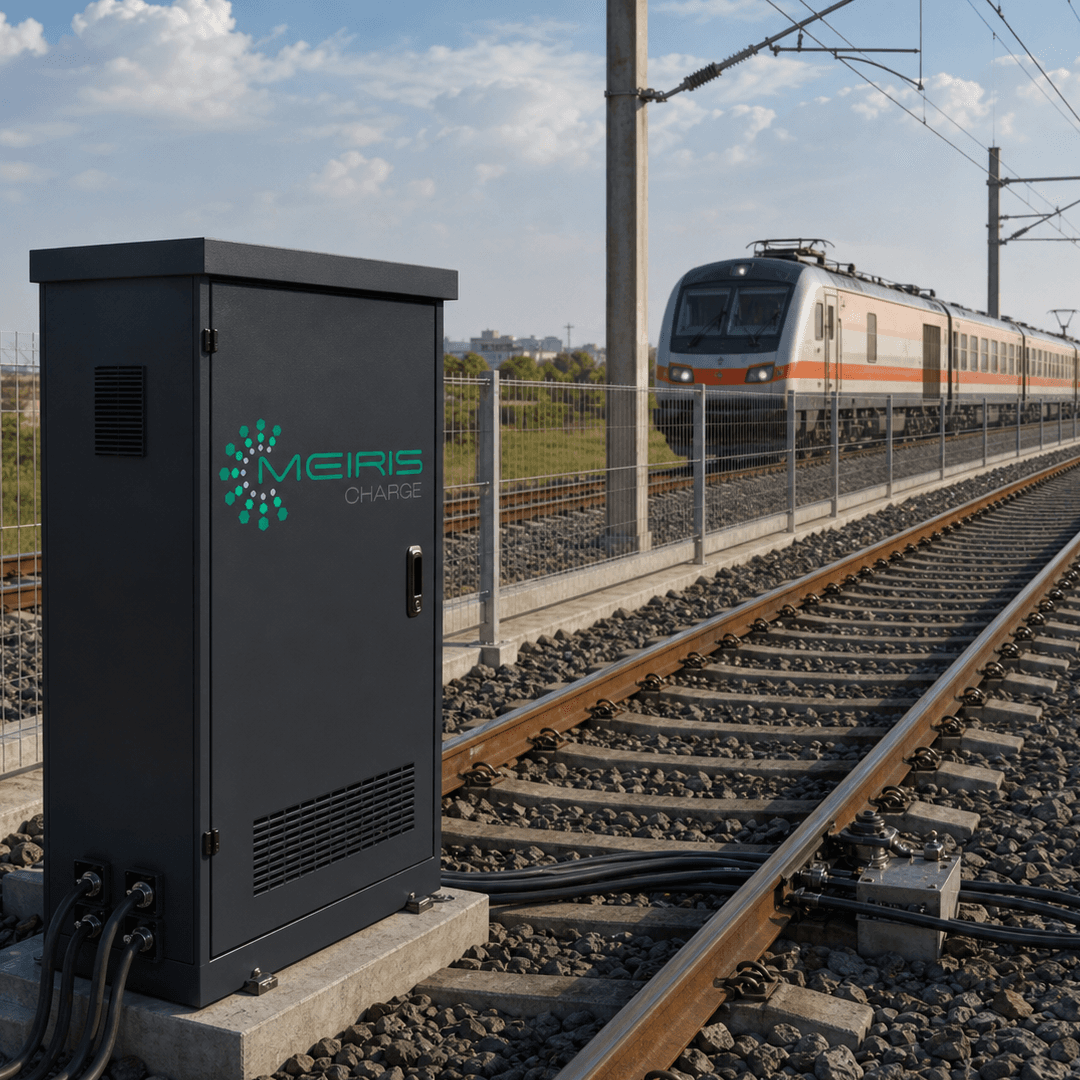
Railway
Traction inverters • Auxiliary converters
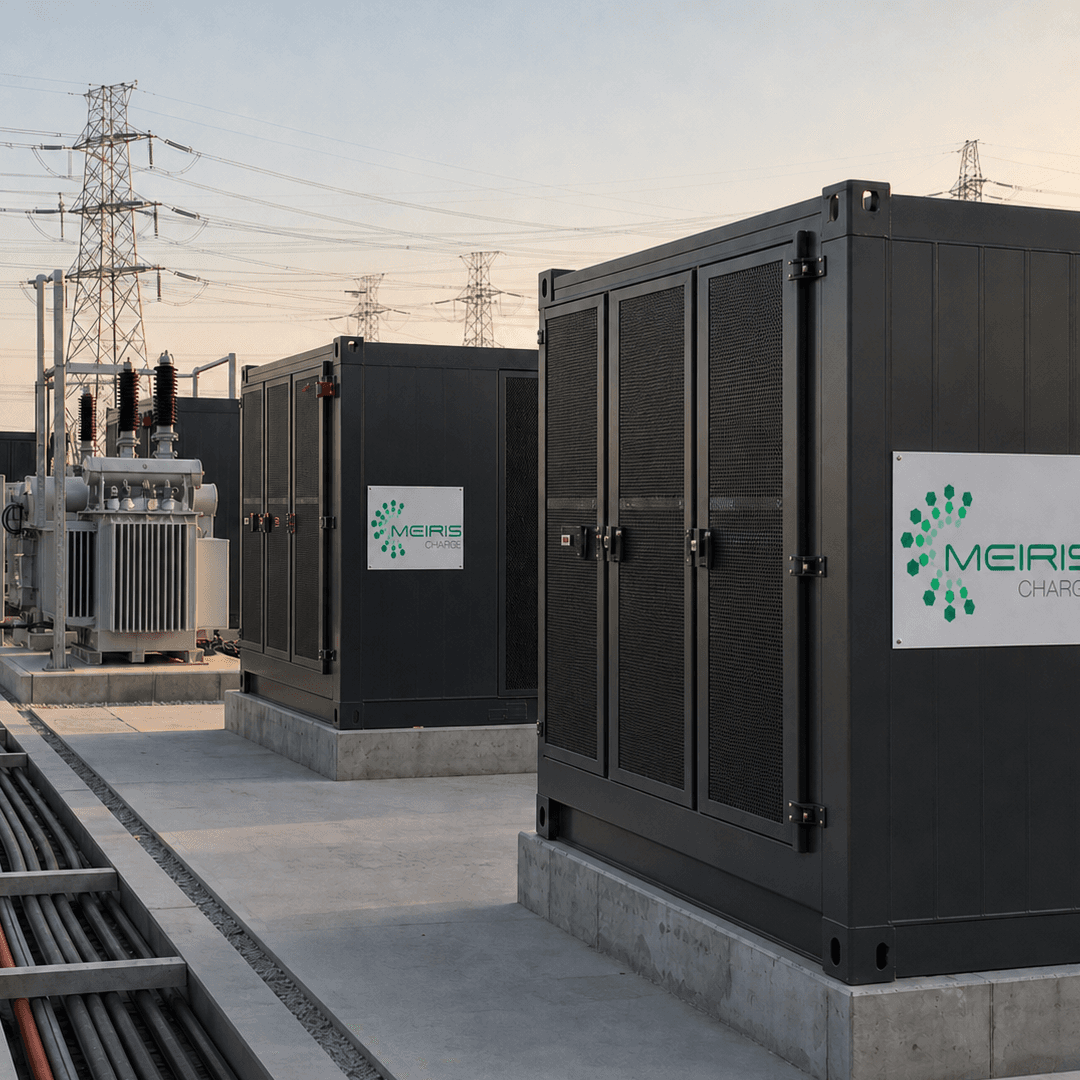
BESS
Power Conversion System (PCS)